+44 1865 259200
Supreme Court Ruling Creates Clean Slate to Elevate Weight of Environmental Impact in Infrastructure Development
28 June 2024
Climate change impacts of infrastructure developments finally getting significant status in the Courts
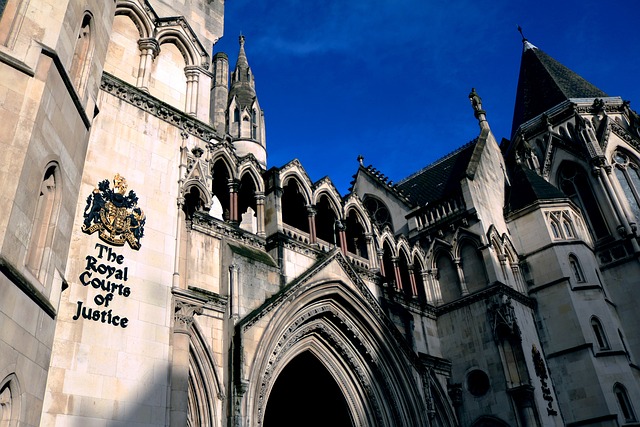
On 20th June 2024 the Supreme Court of Justice provided judgement on the potential impact of greenhouse gas emissions (GHG) of an oil well in Surrey. A quick summary of the 100-page judgement: the planning application did not consider the environmental impact of GHG emissions after the oil had been extracted (i.e. burning of the oil products). The Supreme Court said it should have.
The judgement gave considerable exploration of the term ‘significant’ in the context of environmental harm from GHG emissions, which will no doubt set precedents for future planning decisions.
The judgement also brought the process of assessment of environmental harm back to basics.
It cited the need for an environmental impact assessment is to expose a project to public debate. The decision-making process for granting consent of a project needs to be based on the full context of environmental harm.
Whilst decision makers may determine the social and economic benefits of a planning application outweigh the environmental harm resulting from the lifetime of a development, this can only be done if comprehensive and high-quality information about the likely significant environmental effects of a development is presented.
Failures in communicating the significance of environmental harm of greenhouse gas pollution
Over the last decade the planning for nationally significant infrastructure projects (NSIPs) in the UK has developed precedent for assessing the significance of environmental harm.
A project’s GHG emissions are typically calculated based on a narrow set of boundaries and then compared to the entirety of all emissions from the UK economy. The small number calculated for the project is just a fraction when compared to national emissions, and therefore declared as “Not Significant”.
The likely significant environmental harm of NSIPs appears to be defined by a small number being smaller than a big number, therefore the harm it causes is “Not Significant”.
An example of this precedent can be seen on the development consent order for Lower Thames Crossing (LTC).
LTC is one of the UK’s largest major infrastructure projects which went through public examination at the end of 2023 and is awaiting a new Secretary of State to pass judgement on whether the social and economic benefits of the scheme outweigh its potential greenhouse gas pollution it may cause across its lifetime.
For LTC the GHG emission calculations appear to be comprehensive but still the resulting assessment of significance was determined as “Not Significant” in terms of impacting the Government’s ability to meet their carbon budgets.
Like the NSIP precedents, the comparison of a small number to a big number draws the conclusion that the harm caused by the pollution would is not significant. Like other NSIPs the exploration of significance of the pollution stopped there.
Referencing back to the Supreme Court judgement, is this really a comprehensive exploration of significance?
Some empathy for decision makers?
It is understandable that decision makers may overlook the significance of harm from GHG pollution if experts continue to simplify the assessment of impact. If developer’s experts are saying it’s “Not Significant” there is no need to publicly debate it.
For LTC the harm of the project’s greenhouse potential gas pollution was not publicly debated as a standalone topic in examination. It would be interesting to understand whether the presentation of harm as “Not Significant” meant the planning inspectors felt it was not a material consideration to have a focused discussion on publicly? Turning back to the recent judgement again, it is clear that the Supreme Court notes public debate is critical for climate change.
Would this have been different if environmental harm was addressed from a wider set of parameters than just comparison of the harm caused by the total national emissions?
The Supreme Court Judgement creates a fresh slate for new major infrastructure projects to change the precedent.
It allows for a requirement for climate change to be to be debated in all public examinations, without exception, and for planning evidence to present comprehensive and high-quality analysis about the likely significant environmental harm of pollution from every angle possible to inform the debate.
News topics
Aether Blog Air Pollution Air Quality Assessments Barriers to Net Zero Capacity Building Carbon Footprint Climate Equality Climate Finance Data Visualisation Emissions Reporting GHG Infrastructure Inventories Local Government Mitigation MRV National Government Net Zero Policy Recruitment Society Stakeholder Engagement Waste Sector Wider Impacts
Testimonial
Don't just take our word for it...
Contact us